
 English
 Español
 Portugues
 Pусский
 Deutsch
 한국어
한국어 العربية
 Italiano
 Svenska
 Polski
 ไทย
ไทย Türk dili
 हिन्दी
 Tiếng Việt
 中文
中文 dansk
dansk қазақ
қазақ বাংলা
বাংলা فارسی
فارسی українська
 беларускі
 Suomalainen
 o'zbek
 Србија
 پښتو
پښتو საქართველოს
 Shqipëria
 Afrikaans
 Kikongo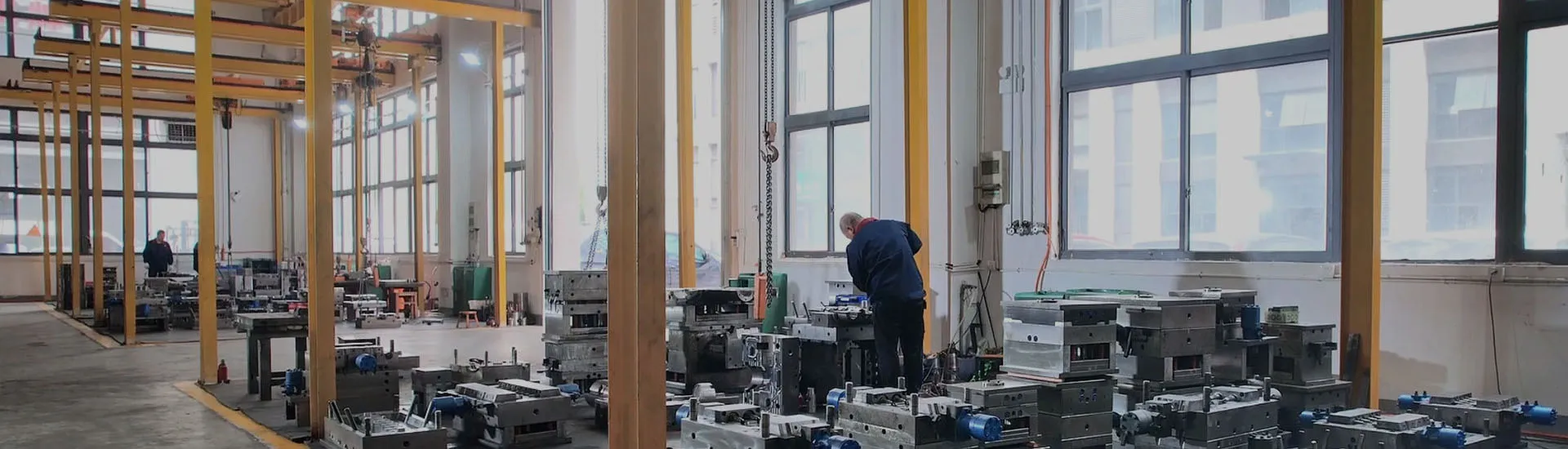
Moule de raccord de tuyau en plastique
Plastic Pipe Fitting Mold: Design, Manufacturing, and Applications Plastic pipe fitting molds are specialized tools used in the injection molding process to produce high-precision plastic pipe connectors, elbows, tees, couplings, and other fittings. These molds are critical for creating durable, leak-proof components essential for plumbing, irrigation, chemical processing, and industrial fluid systems. The design and manufacturing of these molds require advanced engineering expertise to ensure dimensional accuracy, longevity, and cost-efficiency. 1. Mold Design Considerations The design of a plastic pipe fitting mold involves several key factors: - Material Selection: Molds are typically made from hardened steel (e.g., P20, H13) or stainless steel to withstand high-pressure injection cycles and resist wear. - Parting Line & Core Structure: Complex geometries like threaded or barbed fittings require precise parting lines and multi-slide cores to enable smooth demolding. - Cooling System: Efficient cooling channels are integrated to reduce cycle time and prevent warping or sink marks in the final product. - Venting & Ejection: Proper venting eliminates trapped air, while ejector pins or sleeves ensure clean part release without damage. 2. Manufacturing Process The mold manufacturing process includes CNC machining, EDM (electrical discharge machining), and precision grinding to achieve tight tolerances (often within ±0.02mm). High-gloss polishing or texturing may be applied to the cavity surface to meet aesthetic or functional requirements. 3. Injection Molding & Quality Control During production, thermoplastics like PVC, PP, or PPS are injected into the mold under high pressure. Key parameters—such as melt temperature, injection speed, and holding pressure—are optimized to minimize defects like flash or short shots. Post-molding, fittings undergo rigorous testing (e.g., pressure resistance, dimensional checks) to ensure compliance with industry standards (e.g., ASTM, ISO). 4. Applications & Advancements Plastic pipe fittings are widely used in residential, agricultural, and industrial systems due to their corrosion resistance and lightweight properties. Recent advancements include: - Multi-cavity molds for high-volume production. - Stack molds to double output without increasing machine size. - Gas-assisted molding for hollow or thick-walled fittings. Conclusion Plastic pipe fitting molds combine precision engineering with material science to produce reliable, cost-effective components. Continuous innovation in mold technology enhances efficiency and sustainability, meeting the growing demand for high-performance piping systems worldwide. (Word count: 500)
Produit
Catégorie:
-
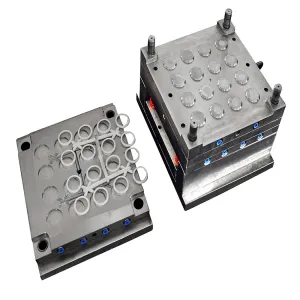
Moule de raccord de tuyau d'anneau anti-fuite de valve UPVC
Leur classification: Moule de raccords de robinet à tournant sphériqueVues: 578Numéro:Temps de libération: 2025-09-17 00:24:47Moule de raccord de tuyau d'anneau anti-fuite de valve UPVCNom du moule :Moule de raccord de tuyau d'anneau anti-fuite de valve UPVCCavité : 16 cavitésTaille du moule: 50mmAcier de moule : 2738 ou 718 pour la cavité et le noyauPortail : portail directstructure du moule : pôle supérieur en saillieDureté du noyau/cavité : HRC 38-42°après traitement thermique sous videPresse à injecter : 180 T Taizhou Huangyan Hong Jin mold Co., Ltd a été créée en 2002. Nous sommes professionnels dans la conception et la fabrication de moules pour raccords de tuyauterie depuis plus de 23 ans.Nous nous réjouisson...
Actualités
Catégorie:
-
[Company News]Photo client
2025-09-23 15:23:52
Affaire
Catégorie:
Aucun résultat de recherche!
Vidéo
Catégorie:
Aucun résultat de recherche!
Téléchargement
Catégorie:
Aucun résultat de recherche!
Recrutement
Catégorie:
Aucun résultat de recherche!
Produits recommandés
Aucun résultat de recherche!




 WhatsApp
 Téléphone