
 English
 Español
 Portugues
 Pусский
 Deutsch
 한국어
한국어 العربية
 Italiano
 Svenska
 Polski
 ไทย
ไทย Türk dili
 हिन्दी
 Tiếng Việt
 中文
中文 dansk
dansk қазақ
қазақ বাংলা
বাংলা فارسی
فارسی українська
 беларускі
 Suomalainen
 o'zbek
 Србија
 پښتو
پښتو საქართველოს
 Shqipëria
 Afrikaans
 Kikongo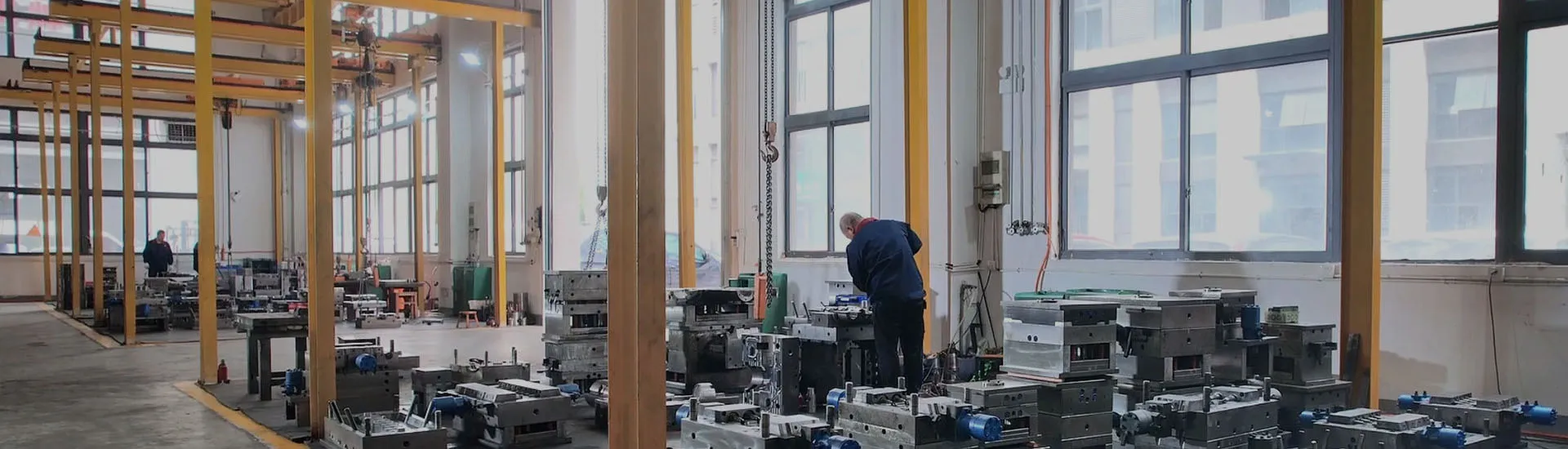
Moulage par injection de coude à 90 degrés en PVC
PVC 90-Degree Elbow Injection Mold: Design and Manufacturing Overview A PVC 90-degree elbow injection mold is a precision tool designed for mass-producing PVC pipe fittings with a 90-degree bend, commonly used in plumbing, irrigation, and industrial fluid systems. The mold must ensure high dimensional accuracy, durability, and efficient production cycles while maintaining the material properties of PVC (polyvinyl chloride). Below is a detailed description of its key aspects. 1. Mold Design Considerations - Part Geometry: The mold cavity replicates the elbow’s inner and outer diameters, including the required radius for smooth flow transition. Wall thickness uniformity is critical to prevent defects like sink marks or warping. - Material Selection: Mold cores and cavities are typically made from hardened steel (e.g., P20, H13) or stainless steel to withstand PVC’s abrasive nature and high-temperature processing (160–200°C). - Cooling System: Strategically placed cooling channels ensure uniform heat dissipation, reducing cycle times and minimizing residual stresses in the molded part. - Ejection Mechanism: Ejector pins or sleeves are designed to release the part without deformation, accounting for PVC’s slight shrinkage (~1–2%) upon cooling. - Venting: Proper venting grooves prevent gas traps, which could cause burns or incomplete filling. 2. Injection Molding Process - Material Preparation: PVC pellets are dried (if necessary) and fed into the hopper. Additives (e.g., stabilizers, plasticizers) may be included for UV resistance or flexibility. - Injection Phase: Molten PVC is injected under high pressure (800–1,500 bar) into the mold cavity via a sprue, runners, and gates. A hot runner system may be used to reduce waste. - Cooling & Solidification: The mold is cooled rapidly to solidify the PVC while maintaining dimensional stability. - Ejection & Post-Processing: The elbow is ejected, and excess material (flash) is trimmed. Some molds include automatic degating for efficiency. 3. Quality Assurance - Dimensional Checks: Critical parameters (e.g., inner/outer diameter, bend radius) are verified using CMM (Coordinate Measuring Machine) or calipers. - Pressure Testing: Sample fittings undergo hydrostatic pressure tests to ensure leak-proof performance. - Surface Inspection: Visual checks detect flaws like flow lines, jetting, or discoloration. 4. Advantages of Injection Molding for PVC Elbows - High Efficiency: Capable of producing thousands of parts per day with minimal post-processing. - Consistency: Tight tolerances (±0.1–0.3 mm) ensure interchangeability in piping systems. - Cost-Effectiveness: Low per-unit cost for large production runs. 5. Challenges & Solutions - PVC Degradation: Overheating can release hydrochloric acid, corroding the mold. Solution: Use corrosion-resistant steels and precise temperature control. - Warping: Uneven cooling may distort the elbow. Solution: Optimize cooling channel layout and cycle time. Conclusion A well-designed PVC 90-degree elbow injection mold balances precision, durability, and production efficiency. By optimizing material selection, cooling, and ejection systems, manufacturers can achieve high-quality fittings that meet industry standards (e.g., ASTM, ISO) while minimizing defects and downtime. Advances in mold flow simulation software further enhance design accuracy, reducing trial-and-error costs. (Word count: 500)
Produit
Catégorie:
-
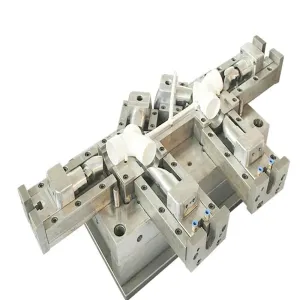
Coude en PVC 90 avec moule de raccord de tuyau de porte
Leur classification: Moule de raccord de tuyau en PVCVues: 457Numéro:Temps de libération: 2025-10-28 21:21:53Coude en PVC 90 avec moule de raccord de tuyau de porteNom du moule :Coude en PVC 90 avec moule de raccord de tuyau de porteCavité : 2 cavitésTaille du moule: 75mmAcier de moule : Allemagne2316 Chine2316 ou4cr13 pour la cavité et le noyauPortail : portail directstructure du moule: cylindre d'huileDureté du noyau/cavité : HRC 40-45°degré après traitement thermique sous videPresse à injecter : 320 T Problème d'injection de PVC et la solution1. Manque de matériau : le phénomène selon lequel le moule ne peut pas être rempli se produit souvent lors du processus d'injection des raccords de tuyaute...
Actualités
Catégorie:
Aucun résultat de recherche!
Affaire
Catégorie:

Vidéo
Catégorie:
Aucun résultat de recherche!
Téléchargement
Catégorie:
Aucun résultat de recherche!
Recrutement
Catégorie:
Aucun résultat de recherche!
Produits recommandés
Aucun résultat de recherche!




 WhatsApp
 Téléphone